Poshmark Multi-Account: A Seller Matrix Playbook for US Resale
A North American reseller who ran a women's closet for a year started sourcing men's clothing. The problems followed right away: men's and women's buyers browse, follow, and price very differently, and once menswear landed in the women's closet, conversion slid on both sides. Splitting into two closets (on Poshmark, one account is one public closet page), each carrying one category and building its own followers, is the standard move when US resale sellers scale. It is also the most unusual platform logic in our multi-account series for North American marketplaces: Poshmark traffic doesn't come from search rankings, it comes from shares and follows inside the community.
Multi-account works here, but only inside clear limits. Rules first.
For a Poshmark matrix, the hard part isn't opening accounts, it's the splitting logic and how you execute the daily share routine. MostMate's antidetect fingerprint browser lays out a workable matrix plan in four steps: term boundaries, one-closet-one-account splitting, compliant batching of the daily routine, and an anti-association checklist.
First, the Rules: Three Boundaries in the Official Terms
Poshmark's Terms of Service don't ban multiple accounts as such, but they do ban one specific kind: creating multiple accounts to evade punishment or avoid restrictions. The terms read "create multiple account to evade punishment or avoid restrictions", alongside a ban on using new or duplicate accounts to get around an active suspension. In other words, every account has to stand on its own as a real, independently run business; accounts can't serve as backups, where a secondary closet picks up selling the moment the main one gets throttled. Accounts can't be transferred or sold either, which matches the framing in our guide to eBay selling limits and multiple accounts: what platforms reject is never the number of accounts, it's accounts standing in for each other.
Translated into tooling, "every account runs independently" sets the baseline requirement for a multi-account fingerprint manager: environments, proxy exits, and operator seats assigned per account, so a risk-control wobble on one account never travels through shared settings to the others. Details on choosing such a tool come in the cost section below.
The second boundary shapes the playbook even more. The community guidelines get very specific under "Be Real": you may hire real human helpers to support operations, but unauthorized programs or forms of automation may not take part in platform activity, and the listed behaviors name likes, shares, follows, and delete-and-repost outright. That line sets the ceiling for every "batch execution" idea later in this article: the share action itself has to be done by a person; tools only replace environment management and monitoring.
Third: every form of off-platform funneling and excessive repeat posting is banned, and relisting the same item over and over is treated as spam. So matrix accounts can't funnel traffic to each other, and the same batch of inventory can't be copied onto several closets unchanged.
How to Split the Matrix: One Closet per Account, Cut by Business Line
The point of splitting isn't "open more accounts to spread the risk"; it's making sure each closet stands behind a real business line. Three dimensions work for the cut:
- Split by category: women's, men's, kids', shoes and bags, home. Poshmark buyers follow a closet for its overall style, and mixed categories dilute follow conversion
- Split by sourcing: wholesale closeouts, personal thrifting, Vintage finds, or your own label (the Boutique tag). Different sources mean different pricing logic and different service standards, and separate closets keep both clean
- Split by price band: moving volume on budget pieces and selling designer pieces at high ticket take completely different playbooks; the latter needs sharper descriptions and better photo quality
Once each account has its own environment, three traps are easy to step into: don't reuse the same set of product photos across accounts (same photo, same caption on several closets reads as duplicate listings to buyers and to the platform alike); stagger each account's listing and share rhythm, and never batch actions at the same minute every day; and configure account details (shipping address, return address) per real business line, the same principle as profile isolation in multi-store setups, so we won't repeat it here.
Running the Daily Routine: Sharing Is a Posher's Job, Tools Just Remove Busywork
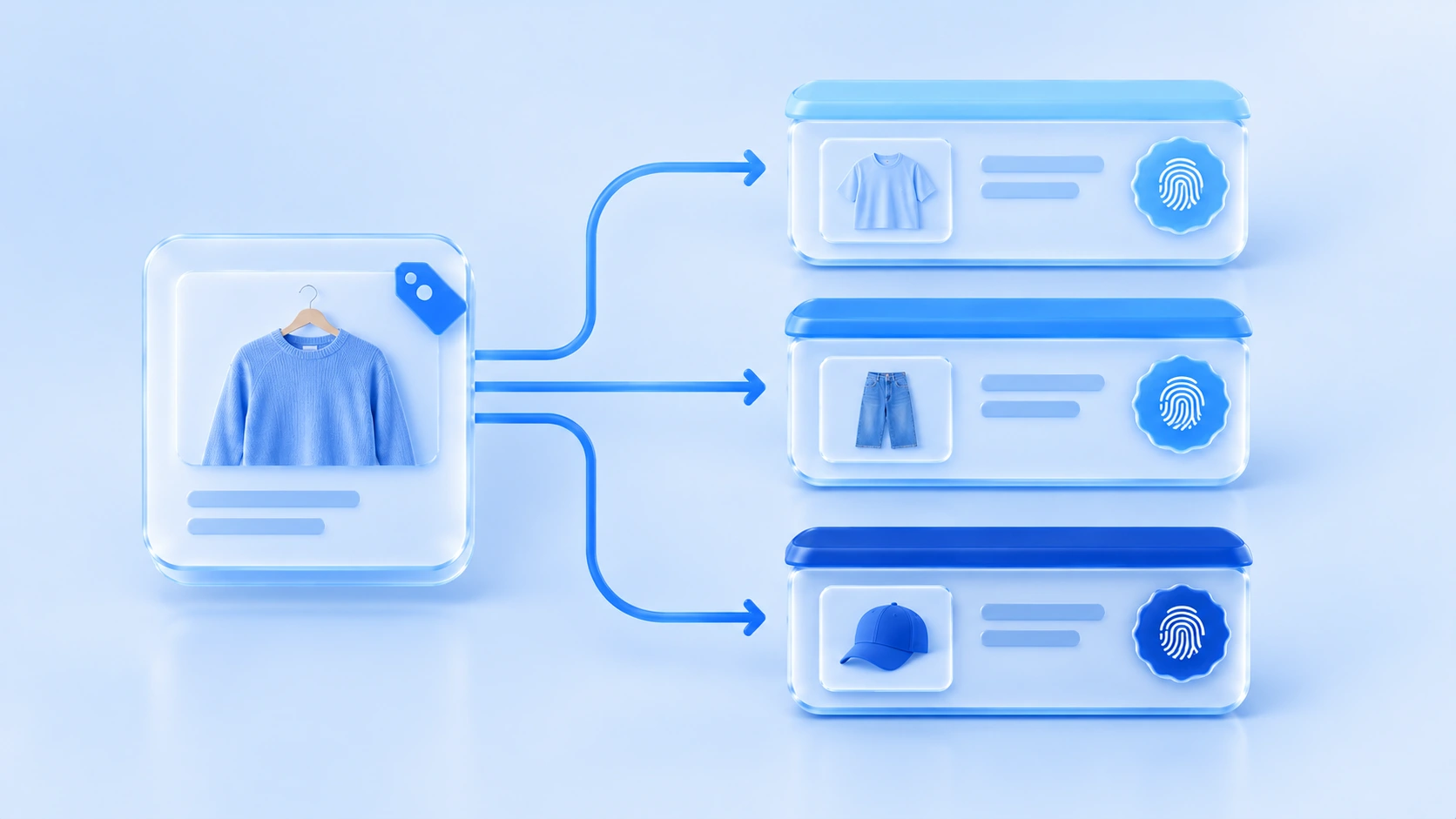
In Poshmark's exposure mechanics, sharing is the core action: sellers share their own listings into their followers' feeds and share them into the themed Posh Parties that rotate throughout the day for extra exposure (official explanation in the Posh Party help article). The single-account daily routine is a loop: list, share, reply to comments, send offers to likers. A matrix means that loop repeats once per account.
The compliant principle: people make the moves, tools save the time:
- Environment level: one isolated environment per account; day to day you just launch the matching environment and you're in, with no repeated logins and logouts. MostMate's free plan includes 2 environments and 2 member seats, which covers the first two closets, and plan pricing scales as your account count grows
- Monitoring level: Posh Parties rotate by time slot. Keep several accounts' feeds side by side with window sync and decide manually at each slot which listings go into which party; the actions stay in human hands while the decision inputs sit on one screen
- Team level: when several people run the matrix, assign member seats per account so every operation happens inside its matching environment and the account-to-operator mapping stays naturally clear. This structure of environments and seats per account isn't limited to selling; affiliate marketing and promotion runs the same daily multi-environment rhythm on the same logic
- Cadence level: stagger the share windows across accounts, which both mirrors how real sellers actually distribute their activity and keeps one device source from repeating high-frequency actions in the same stretch of time
The flip side deserves its own list: any auto-share script, auto-like or auto-follow tool, or bulk delete-and-repost bot falls squarely inside what the community guidelines name as prohibited. That such tools exist on the market doesn't make them usable; and with the terms' clause that the platform may restrict accounts at its own discretion, every automated action leaves the risk with your account.

What Anti-Association Means Here: This Platform Reads Different Signals
Poshmark is a community-driven platform, so association risk looks different than on listing-style marketplaces: beyond device and network isolation at the login layer (mechanics in what is environment isolation, and validate every proxy's ownership and consistency with this two-layer proxy check before it goes live), you have to manage behavioral similarity. A practical checklist:
- A fixed login environment and exit IP per account, never mixed across environments
- Photo backdrops, templates, and watermarks packaged per account; one shared asset library across every closet is out
- Stagger listing and share times plus frequency per account; real sellers don't keep identical schedules
- Keep each account's follower interactions (replies, follow-backs) in their own voice and rhythm, and don't let accounts follow each other into a closed loop
Fold the Tooling Cost Into the Matrix Math
A matrix costs three things: inventory, a proxy line per account, and an environment management tool. When you evaluate environment tools, most comparison content ranks by fingerprint parameters and team features, which is fine for building a shortlist; on price, what actually matters is the number of free environments and the price of each added one, because a matrix grows account by account and you shouldn't pay for environments you don't use yet. As for fingerprint parameter differences, their impact on a Poshmark setup is limited; what matters is that the values an environment reports stay stable and consistent over time, and the right way to check that is a detection page test rather than trusting a spec sheet. On the proxy side, North American residential lines are the default; decision criteria by business stage are in the residential vs. datacenter IP analysis.
FAQ
Can one person have multiple Poshmark accounts?
The terms neither explicitly allow it nor ban it across the board; the only explicitly banned kind is multi-account used to evade punishment or avoid restrictions. In practice, a matrix presumes that every account is an independently run, real business line and that you accept the platform's discretion to restrict accounts. New accounts opened to dodge a suspension are squarely prohibited.
Is it safe to run the daily routine with auto-share tools?
No. The community guidelines explicitly allow hiring real human helpers but ban unauthorized programs and automation, and likes, shares, follows, and delete-and-repost are all on the named list. The time an auto-share script saves turns into risk exposure at the account level.
Can matrix accounts share and funnel to each other?
Better not. Cross-account funneling can be flagged as linked behavior and easily brushes against the spam and off-platform traffic clauses. Running each closet independently, with its own category and its own audience, is the sturdier structure.
Wrapping Up
The right way to run a Poshmark matrix is to read "one closet, one account" as a business-line split, not account cloning: cut closets by category, sourcing, and price band so each stands on its own, give each closet its own environment, and let people run the daily shares while the environment tool saves the time. This platform's community nature means its risk control reads behavioral signals, not just technical ones, and asks whether the behavior feels like a real seller. The entry cost of the tooling can stay very low: start on the free plan at the MostMate fingerprint browser site and scale up once two closets run cleanly. Run every account as its own business, and the matrix holds.

MOSTMATE
Secure Multi-Account Management, Made Simple
Start with your first account and use MostMate to build safer, smarter, and more efficient multi-account operations.
- Independent profiles. Consistent identities.
- AI Automation · Account Health · Team Operations