Why E-commerce in 2026 Runs on AI Agents: Vendors, Business Models, and Risk Blind Spots
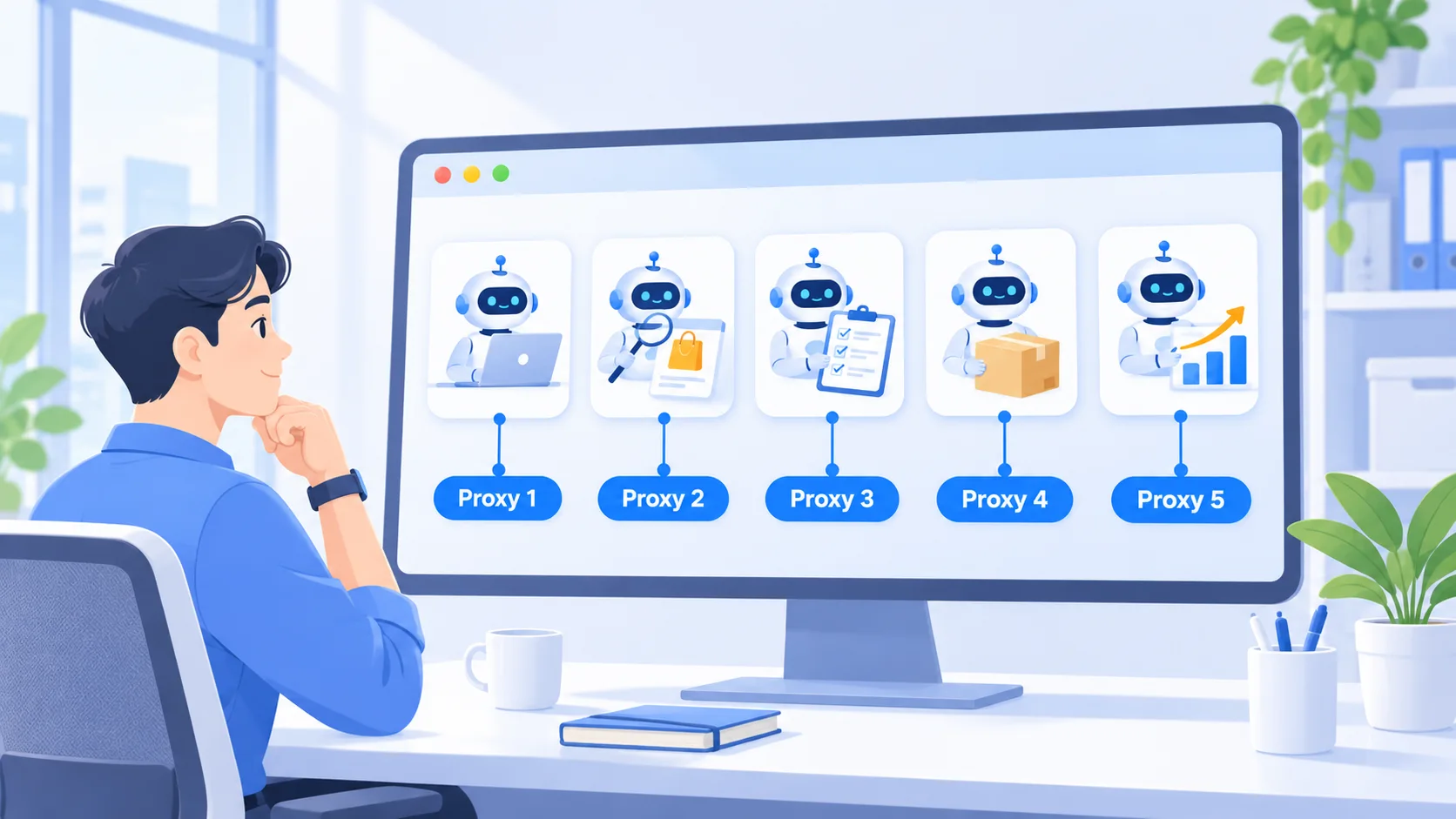
In its coverage of China's Double 11 shopping festival in 2026, the Xinhua news agency recorded a telling scene: a cross-border seller of custom baseball caps was landing overseas order after overseas order with more than 80 AI agents, each with its own job — market research, product design and customer service were handled by separate "digital employees". The founder had no prior background in foreign trade. This is not an isolated story; platform-side data confirms it has become the norm.
When this wave reaches day-to-day store operations, the efficiency gains and the risk-control exposure are two sides of the same coin. The team behind MostMate's AI fingerprint browser has checked every figure in this article against its original source, so you can decide whether to get in — and where to start.
Amazon's own data shows that more than 98% of surveyed Chinese sellers already use AI tools in store operations, and 16% have moved beyond single-point tools to AI workflows or agents. Most people are still "using tools"; a minority have already let tools run processes on their own. If you plan to let AI operate multiple stores or social media accounts, put each account into an isolated environment with a fingerprint browser built for independent per-account environments first — a browser that gives every account its own distinct device identity — to reduce the risk of your accounts being linked by platform risk-control systems.
What Is an AI Agent
At its core, an AI agent is an AI executor that can plan on its own, call tools and carry a task through to completion. You give it a complete goal; it breaks the work into steps, pulls the data, takes the actions and delivers a result. A chatbot, by contrast, only outputs an answer to whatever you ask.
The difference fits into one table:
| Dimension | Chatbot | AI Agent |
|---|---|---|
| How it works | One question, one answer; outputs suggestions | Breaks down tasks and executes them end to end |
| Data capability | Relies on the model's built-in knowledge | Calls platform data tools in real time |
| Output | A piece of text | Structured reports, already-executed operations |
| E-commerce example | Writes one line of product copy | Checks competitors, compares prices, generates copy and files it |
The barrier to entry is conversation: paste in a product link and your operating requirements, no coding needed. On boundaries, agents own the execution layer and put the evidence in front of you; whether to actually list a product or how much to spend on it remains a call for the operator and the owner.
Five AI Agent Use Cases in E-commerce Operations for 2026
A trend is only as real as its numbers. Data Amazon published in June this year shows 98% of surveyed Chinese sellers already use AI tools to run their stores. Alibaba's side is just as clear: more than 10 million small and medium businesses worldwide now run operations on Accio, Alibaba's AI sourcing platform, where token usage has grown tenfold year over year. Broken down by stage, each of five scenarios has measured results behind it:
| Stage | Measured results | Source |
|---|---|---|
| Content production | One designer producing about 100 images a day; a system generated 37,000 candidate images in 15 days, 24,000 survived screening, and 74.7% earned a "featured" tag after being uploaded to Tmall | Economic Information Daily |
| Multilingual listings | Generated in minutes; per-person productivity up 5-10x | Shenzhen salon transcripts |
| Smart customer service | Human-handoff rate down 45%, conversion up 30%; Douyin opened its Feige smart customer-service suite free of charge during the mega sale | Shenzhen salon transcripts / CCTV.com |
| Smart ad placement | Alimama, Alibaba's advertising platform, runs its Wanxiang Dianjing tool to calculate placement strategies dynamically; manual review time down 60% | CCTV.com / Shenzhen salon transcripts |
| Automated outreach | One tape manufacturer's AI trade agent sent more than 5 million outreach emails in a year, reached 770,000 buyers and landed 561 qualified leads | Ningbo Municipal Commerce Bureau |
The Economic Information Daily's report judged that during this Double 11, AI shifted from the consumer side to empowering merchants on the supply side, that e-commerce AI agents are still in their bonus period, and that by around next year's 618 mid-year shopping festival most merchants will be using them deeply.
JD's merchant platform Jingmai has built an AI operations center that brings together more than 60 AI tools covering product selection, content, marketing, fulfillment and customer service; it has helped 80% of new merchants operate more efficiently and provides daily operating advice to 96% of them. In other words, new merchants are now served by AI tools by default — opting out has become the exception.
Who the Main AI Agent Vendors Are: A Three-Layer Landscape
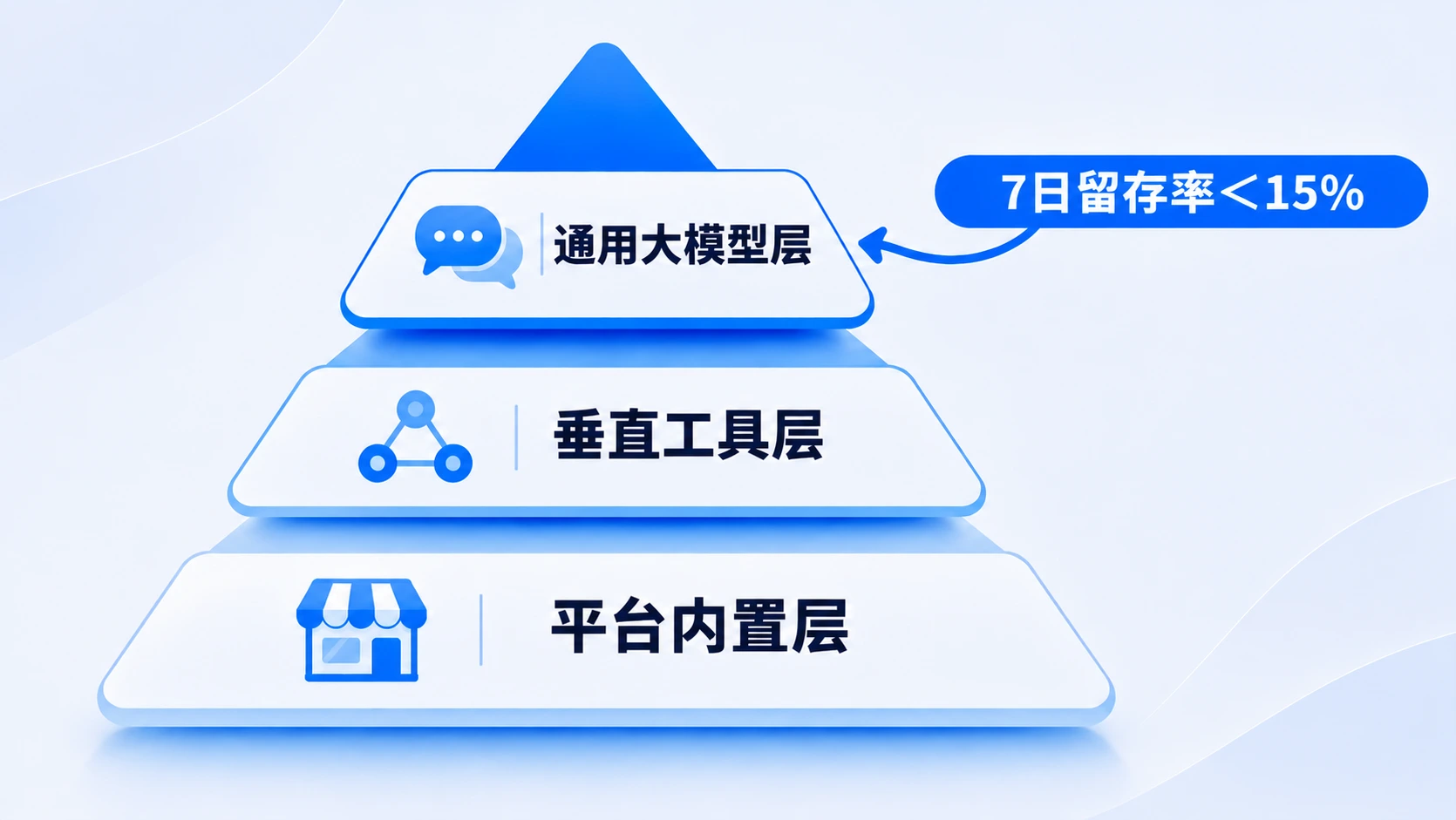
Vendors fall into three layers depending on who provides the service. Double 11 2026 served as a concentrated showcase of platform AI capabilities, and CCTV.com's report summed up the pattern as "moving from tools to agents, from single features to full-funnel closed loops":
| Layer | Representative vendors and products | Best fit |
|---|---|---|
| General-purpose LLM layer (consumer shopping guides) | Alibaba's Qwen built into Taobao; ByteDance's Doubao built into Douyin Mall; JD's AI shopping assistant "Dongdong" | Buyer-facing recommendations and price comparison; merchants benefit indirectly |
| Platform-native operations layer (merchant backends) | Alibaba's Accio; Jingmai AI operations center; Alimama's Wanxiang Dianjing; Douyin's Feige and Qianyi agents | Store merchants going deep on a single platform |
| Vertical independent tools | Cross-platform e-commerce agents such as Qinghu, covering Amazon, TikTok, Ozon, Shopee and multiple domestic channels | Multi-platform matrix operators, cross-border sellers |
If your business lives on a single platform, the platform-native layer wins on integrated data and zero integration work. If you sell across multiple platforms or maintain account matrices, the vertical layer's cross-platform orchestration fits better. The two layers are not mutually exclusive — many teams run daily operations on built-in platform tools while vertical agents handle cross-platform research.
But CCTV.com's report also disclosed that AI shopping tools currently see less than 15% seven-day retention and only 3% thirty-day retention; most consumers are still in try-it-out mode. This asymmetry between the buying and selling sides means the race among e-commerce AI agents on the merchant side has already started while consumer habits remain unformed — a time window for sellers, not bad news.
How AI Agent Business Models Add Up: From Selling Software to Selling Outcomes
Understanding how vendors charge tells you which budget framework to use. Three pricing models dominate the market today:
| Pricing model | Representative example | Who it fits |
|---|---|---|
| Subscription | Kovax in the overseas Shopify ecosystem tiers at $49.99-$399.99 per month, with per-minute call billing as an option | Single-scenario teams with steady demand |
| Usage-based | Token top-ups went live as a standalone category for the first time during Double 11 2026: Tmall opened an "AI Space Station" where vendors including Zhipu, Kimi, MiniMax and DeepSeek sell credits you top up the way you top up a prepaid phone plan (CCTV.com) | Teams with volatile usage across multiple tools |
| Platform-subsidized | Jingmai's AI operations center and Feige smart customer service are free during major promotions, with the platform absorbing the cost | New merchants on a platform, teams still in trial mode |
There is a reference point for the real cost on the merchant side: the Shenzhen salon transcripts mention a company whose monthly token spend per employee has exceeded 3,000 yuan — roughly $420. Whether that money buys labor replacement or goes to waste, the Economic Information Daily stays measured: "the economics between model call costs and actual order conversion still need a longer observation period."
JD's framing points to where things are going: Jingmai has upgraded the platform from "giving tools" to "giving results". Subscriptions buy tool access; usage-based billing buys compute; "giving results" prices by business output. When you evaluate any product, one question is worth asking: what does it charge by, and what does it use to prove it is worth that price.
Why Bulk AI Agent Operations Trigger Bans: Two Verification Chains in Platform Risk Control
Efficiency amplified is risk amplified. Alibaba's Accio Work agents already let one person manage five stores independently. But when dozens of accounts share the same browser environment and the same IP gets hammered by scripts at high frequency, the platform's risk-control system does not see "efficient" — it sees "a violation matrix under machine control".
Amazon's rules are explicit: once unapproved multiple accounts are identified, all linked accounts may be suspended or banned; detection dimensions include IP addresses, device information, bank accounts, registration emails and phone numbers (source: Amazon's official explanation of its multiple-account policy).
After this round of AI risk-control upgrades, industry observers have summed up two key verification chains. The identity chain checks business licenses, legal representative details and registration filings for shared addresses and batch-registration traces. The funds chain traces how often payout accounts are changed and flags abnormal transaction flows.
Industry statistics show that in 2025 Meta, TikTok and Google together banned more than 12 million linked accounts, a large share of them belonging to cross-border sellers from China; accounts registered on datacenter IPs survived at a rate below 15%. The main cause of bans is not content violations — it is account linkage.
The right answer is not to give your agent smarter camouflage. It is to split the environment layer cleanly first: let the agent be the brain, and let every account live in its own isolated environment. A compliant environment setup comes down to three things: one independent device fingerprint per environment, separate cookies and local storage, and one fixed dedicated exit IP, with nothing shared across accounts.
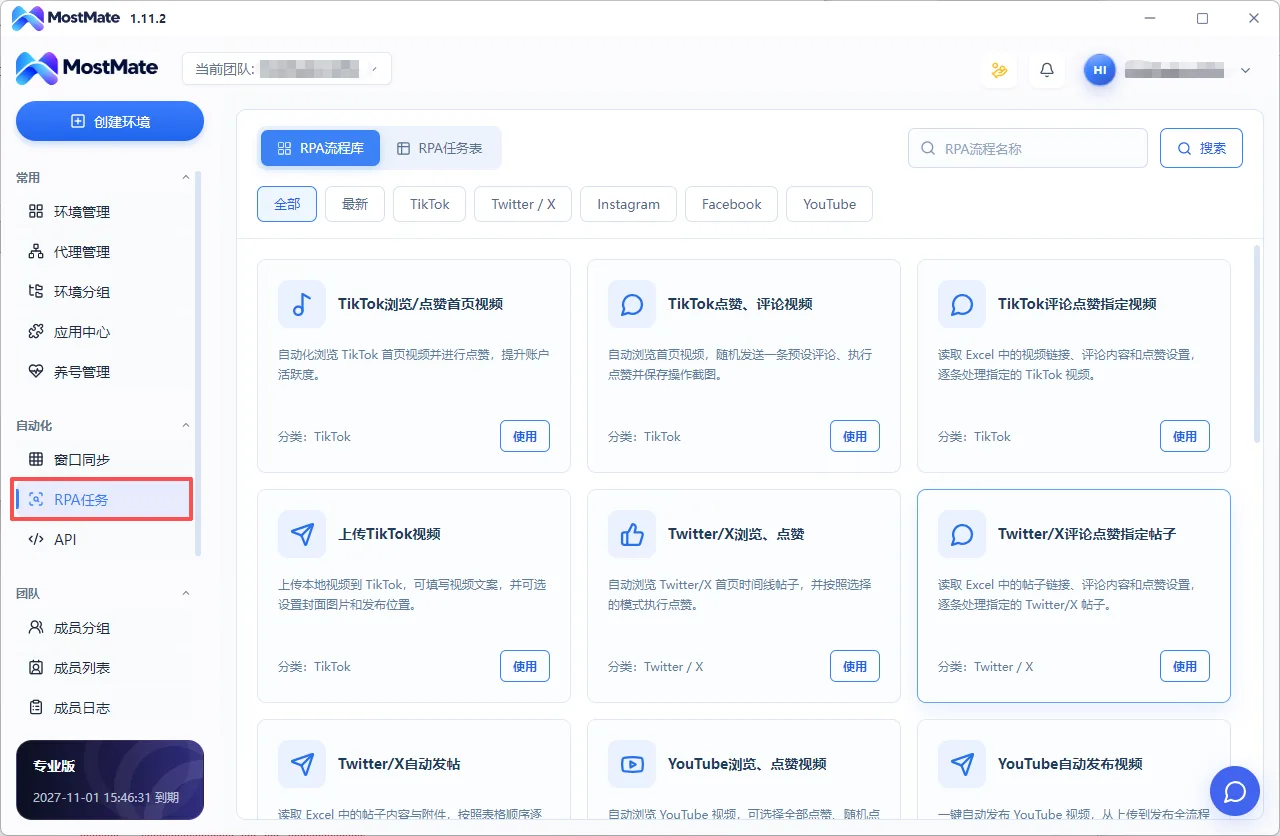
Take the feature design on MostMate's fingerprint browser as an example: creating an environment auto-generates the fingerprint parameters; once a proxy is bound, that environment reaches the network only through the designated exit; the RPA flow library is grouped by platform, and tasks are bound to specific environments, which rules out one task spanning multiple accounts by design. For multi-account management, the agent handles thinking and business actions while the environment layer handles isolation, lowering the chance that accounts get linked. Two layers, two separate jobs.
How to Roll It Out: A Three-Step Checklist from Scene Selection to Guardrails
Once you have read the trend, roll out in three steps. Most stores should start from one single scenario and widen the agent's scope only after it proves reliable.
- Pick one high-frequency scenario — customer-service tickets, product-selection research and content generation are three common starting points, and the test is "are the results easy to verify". Jingmai's 60-plus tools are sorted by stage, so you can use them as a ready-made scenario list. Do not automate the whole funnel on day one; get a single point running reliably to build trust, then expand.
- Set up environments before connecting agents — before AI touches an account, the account should already be running stably inside an isolated environment: one environment per account, one fixed exit IP. For how to partition environments across accounts, our article on the five-environment architecture for foreign-trade SOHO operators breaks it down by function — outreach, communication, stores, payments and backup — and matrix teams can scale with the same logic. Once tasks are bound to environments, never share login states across them; that is a precondition for automation, not an option.
- Set guardrails and keep an audit trail — draw a clear line between what the AI may execute on its own and what needs human sign-off: price changes, refunds and large ad spends get human review points, and every task's environment, parameters and results go into a log.
How Long the Window Stays Open: Reading the Entry Point from Platform Moves
The Economic Information Daily's timeline goes like this: at Double 11 2025, AI showed up mainly on the consumer side as shoppers began using AI to pick products; at Double 11 2026, AI turned to the supply side to empower merchants. Industry insiders expect that by around next year's 618 festival, most e-commerce merchants will be using agents deeply, and the competitive question will shift from "whether to use them" to "how deeply". The macro upside has a basis too: National Bureau of Statistics data shows China's online retail sales from January to August 2026 reached 13.48 trillion yuan — roughly $1.9 trillion — up 4.6% year over year, and industry estimates suggest that for every percentage point of untapped potential AI unlocks in e-commerce, hundreds of billions to over a trillion dollars in incremental consumption could follow.
The longer-range call comes from Alibaba's international B2B platform: cross-border trade is moving from B2B into an A2A (agent-to-agent) era, where buyer-side agents will source goods on behalf of procurement teams. Wang Qiang, an executive at Alibaba's 1688 wholesale marketplace, has a warning for sellers: if you want customers' "digital agents" to find you accurately, your products must become AI-readable digital models — standardized parameters, traceable quality, credible fulfillment.
Entering now means "single-scenario validation plus environment infrastructure", with costs limited to subscription and IP fees. Wait until most merchants have figured it out, and the same spend only keeps you level — it no longer buys excess returns. The bonus period is fundamentally an efficiency gap, and efficiency gaps have a half-life measured in quarters.
Verdict
Follow the data chain of this trend: 98% of sellers already use AI tools, 16% have moved up to agents, platforms have put tokens on the shelf and upgraded from "giving tools" to "giving results", and the window is measured in quarters. The right order of entry is counterintuitive: build the environment infrastructure first, then bring in the agents — because automation multiplies any environment flaw.
If you are about to hand part of your store operations to AI but are not sure which fingerprint browser to pick, see our updated 2026 fingerprint browser recommendations. Or start with MostMate's free tier and get the environment foundation solid from day one — environment management, RPA flows and account-warming management (routine account upkeep) help you get moving immediately.
Frequently Asked Questions
Do e-commerce agents require coding skills?
No. Mainstream e-commerce agents work through conversation — paste in a product link, category keywords or your operating requirements and you are ready to go; the professional skills are carried by built-in skill libraries and role presets.
Can an AI agent make operational decisions for you?
It cannot, and it should not. Agents fit the execution layer — data collection, analysis, content generation — putting solid evidence in front of people. Whether to list a product, how much to spend and how to price it remain decisions for the operator and the owner, and major decisions deserve a second look from more than one angle.
How can one person run cross-border e-commerce with AI agents?
The case of the OPC founder in Xinhua's report — OPC meaning a one-person company — is a workable path: on a workbench like Accio, set up digital employees with clear divisions such as market research, product design and customer service, and one person covers a workflow that used to require a team. Start with one high-frequency stage and get it running; do not configure 80 agents on day one.
How should an AI agent handle multiple accounts safely?
Start with one isolated environment per account: its own device fingerprint, its own cookie storage and one fixed dedicated exit IP. Then bind the agent to specific environments for its tasks and never share login states across environments. Environment isolation and agent orchestration are two different jobs — the first is the safety precondition for the second.
Will AI-generated content used for traffic get your account banned?
In 2026 platforms were issuing more than 15 million AI-rejection diagnostics per day with recognition accuracy above 95%. The compliant route is to label AI-generated content clearly and build trust through real people on camera or authoritative endorsements; evading review with veiled wording no longer works and links your account to abusive-operator networks.

MOSTMATE
Secure Multi-Account Management, Made Simple
Start with your first account and use MostMate to build safer, smarter, and more efficient multi-account operations.
- Independent profiles. Consistent identities.
- AI Automation · Account Health · Team Operations