How Do You Manage a Facebook Page Matrix? Start with the Ownership Structure
Core takeaway: contagion between Facebook pages travels along the admin personal profile, and the pages themselves are only assets hanging on that axis. The first line of defense against contagion is not built in the browser but in the ownership structure: page clusters hang under different personal profiles, permissions come off as soon as a relationship ends, and BMs and payment methods are kept separate. The environment layer then pins down each profile's login boundary. The order matters. However clean your environment setup is, it cannot stop enforcement from cascading layer by layer.
Start with a real prototype. The head of a page-management agency had used his own long-running personal profile as admin for more than a dozen client pages. One client's page was taken down by the platform over a content violation. A few days later, he found that every page under his management and the ad accounts bound to them had lost access all at once. The notice said his account might be associated with another account that had violated the rules.
He had never posted anything on that violating page; he had simply left the admin role in place. Cases like this are not rare in the appeal records of agencies. Cabilly, a legal services firm, collected cases of the same pattern in its analysis of why linked accounts get banned: pages you no longer manage but never formally left, penalties on the violating page spreading along account links, until your own personal brand page disappears with them.
Contagion travels through three layers: the personal profile, the pages, and the BM
A Facebook page is not a standalone account. It is an asset hanging under an admin personal profile, and that profile may itself be a member of a BM. These three layers decide where enforcement goes. When a page breaks the rules, the penalty can land on the admin personal profile. When a personal profile gets restricted, every page it manages loses access together. When a BM's linked payment method or ad account runs into trouble, the pages inside that BM also come back under review. The phrase in the platform's notice, "associated with another account that violated the rules", refers exactly to this axis of association.
For a team running a page matrix, this transmission structure means two things.
- First, no matter how well the matrix itself is isolated, if an admin personal profile runs into trouble, the whole group of assets wobbles with it. The personal profile is the asset most worth investing in across the matrix.
- Second, permissions are an invisible form of association. Even if you have not touched a page for half a year, as long as the admin role is still hanging on the platform, any movement on that page gets charged to your account.
Among Cabilly's recommendations, the permission audit comes first: when a working relationship ends, remove the role completely. Not a downgrade, a removal. The quality of an admin profile's nurturing decides the foundation of the matrix, and the staged checklist for a new Facebook account's first 7 days can be used directly as the starting routine for an admin profile.
Four types of association signals between pages
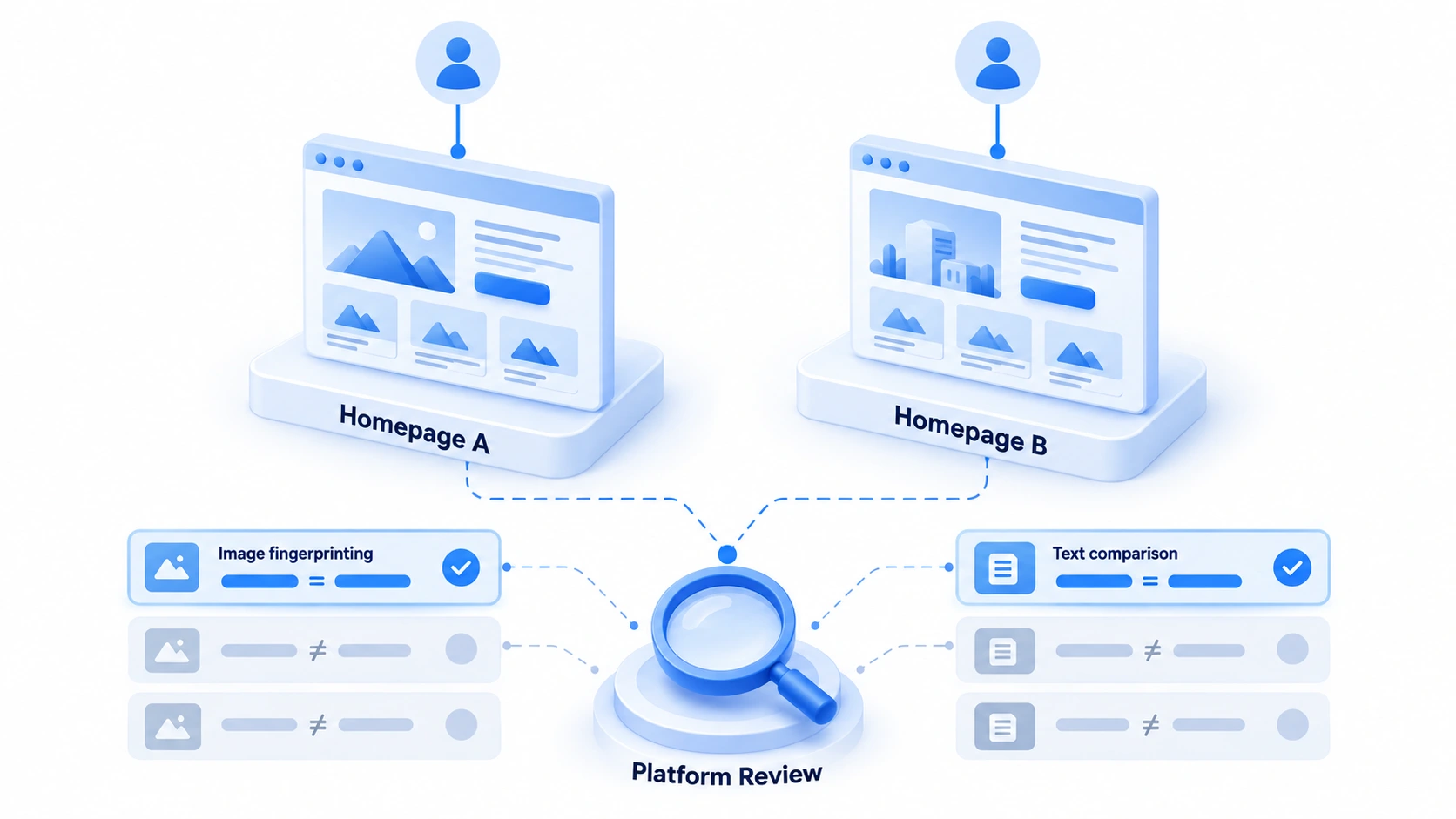
Pages in a matrix operate independently of one another, yet the platform can still group them together for evaluation. The basis is four types of signals. Third-party operations material breaks down the risk control of multi-page management and describes how these signals are judged in fairly concrete terms.
- Admin overlap. Multiple pages managed by the same batch of personal profiles is the most direct basis for classifying them as one network, and a blank personal profile with pages hanging all over it is a red flag in itself.
- Content homogeneity. The platform compares post text, image hashes, and video fingerprints across pages. Publish the same video as-is on five pages, and cross-page content matching hits immediately.
- Cross-page engagement. Page A liking page B, sharing, and tagging each other forms a closed engagement network, and systems read this kind of social graph as a strong signal of coordinated behavior.
- Shared assets. Multiple pages hang in the same BM and share payment methods, ad accounts, and verified domains; within the BM these are all linkable association points.
Of the four signals, admin overlap and shared assets are structural, and they should be settled when the matrix is built. Content homogeneity and cross-page engagement are behavioral, controlled through everyday execution discipline. Put this signal list side by side with the item-by-item check in the multi-account association risk check, and the checks for a page matrix and a network account matrix can merge into one sheet.
How to build the ownership structure: four actions that set the isolation boundary
The main engineering of contagion resistance is finished before the matrix is built. Once the ownership structure is set, most of the transmission chain is severed at the design stage. Work through the following order.
1. One admin personal profile per page cluster. Draw clusters along business lines: two or three related pages can share one profile, but different clusters never share. An admin profile needs a real personal usage history; a blank profile holding pages is an explicit risk.
2. Tier the roles, hand out admin sparingly. Daily publishing, replies, and scheduling are covered by Editor or Moderator roles; keep the admin role for the cluster owner only. Cabilly's advice is that the smaller the permissions, the lighter the shared liability when something goes wrong.
3. Keep BMs separate when the matrix is spread out. Pages from different business lines do not enter the same BM, and payment methods and ad accounts follow the BM without crossing lines. A brand matrix run by region is a concentration the platform allows; loading a spread-out traffic matrix into one BM amounts to declaring on your own that every page is related.
4. Permissions end when the relationship ends. An employee leaves, a client contract ends, an agency handover: remove the corresponding role the same day. Zombie permissions left hanging on people are the most common fuse in contagion cases.
This structure asks a fair amount of team discipline. The profile, page, BM, and payment mapping of every cluster must be registered in a ledger: who sits in which cluster, manages which pages, in which role, all at a glance. Only then can you scope the impact on the day something happens.
The environment layer pins down the login boundary of every admin profile
The ownership structure governs how assets are attached; consistency of the login environment is pinned down by tooling. MostMate is an antidetect browser that assigns each account its own browser environment and network exit. Environments are grouped by cluster, one group per cluster. Each admin personal profile works inside its own fixed environment, in four steps.
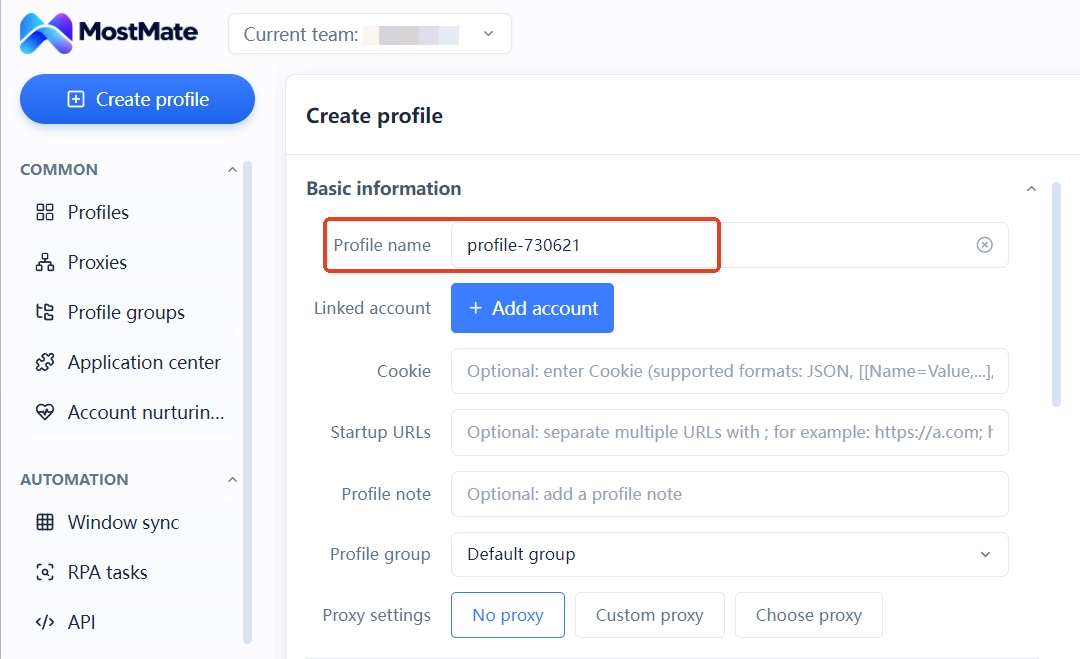
Step 1: create the environments and group them. Write the cluster ID straight into the environment name, for example "page-cluster-a-01". Grouping keeps the environments of one cluster together.
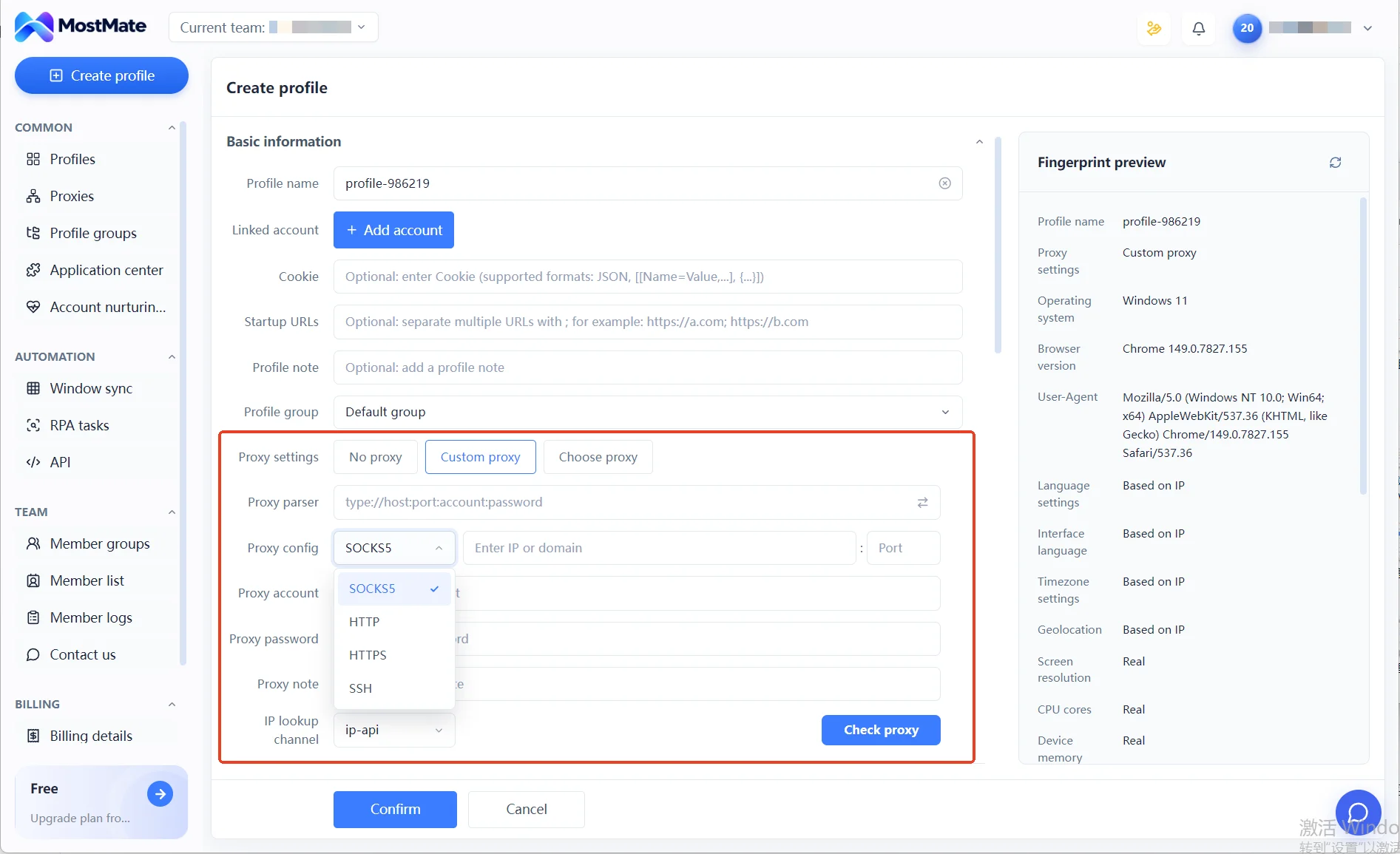
Step 2: bind an independent proxy to each environment, with the exit region matching the market the pages serve. Test the connection before launching and verify the actual exit on a detection page.
Step 3: no cross-login between environments. Cookies and login data never enter another environment.
Step 4: grant member access by group. Member logs record who operated in which cluster and to whom an environment was handed over, so every permission change stays traceable.
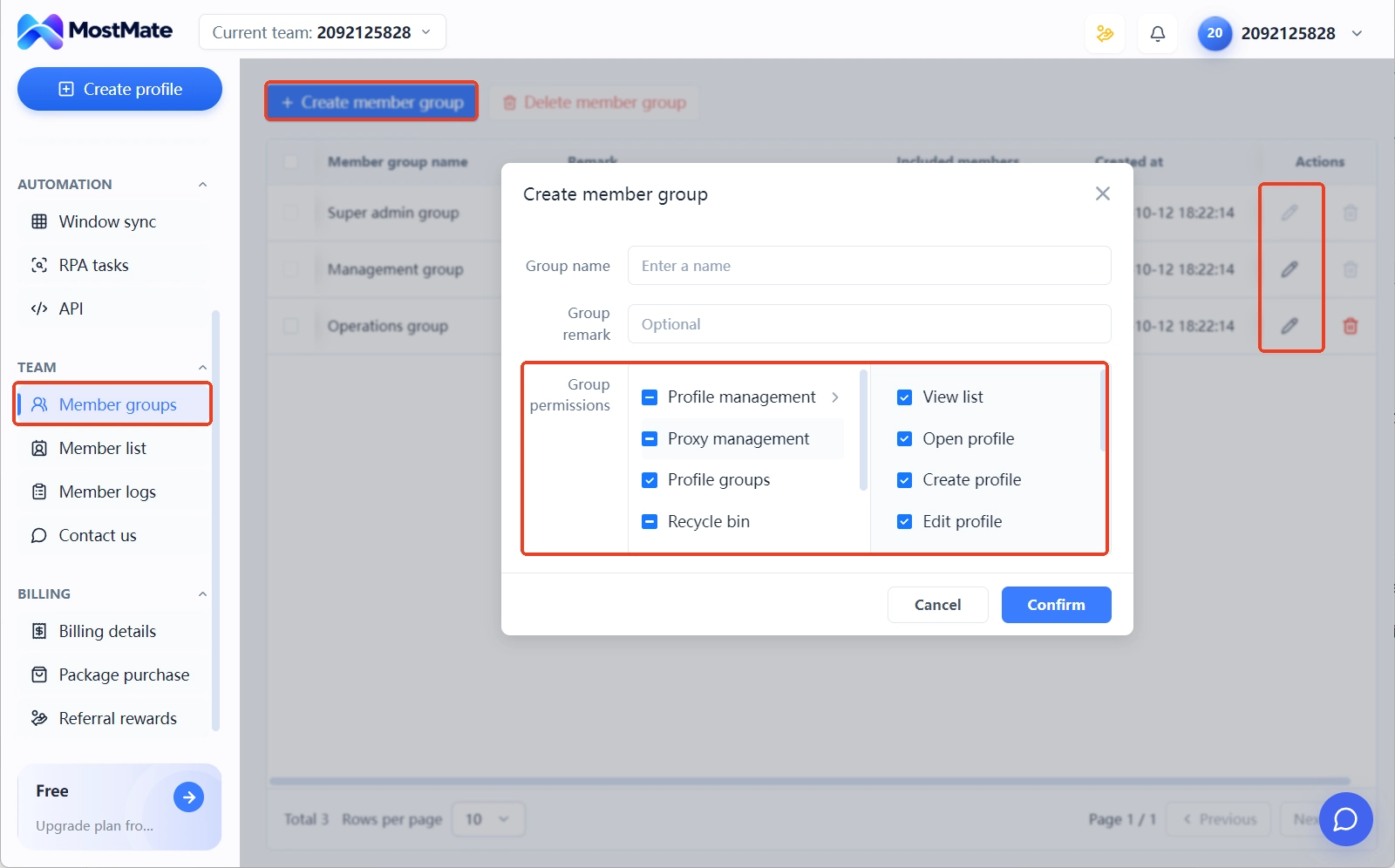
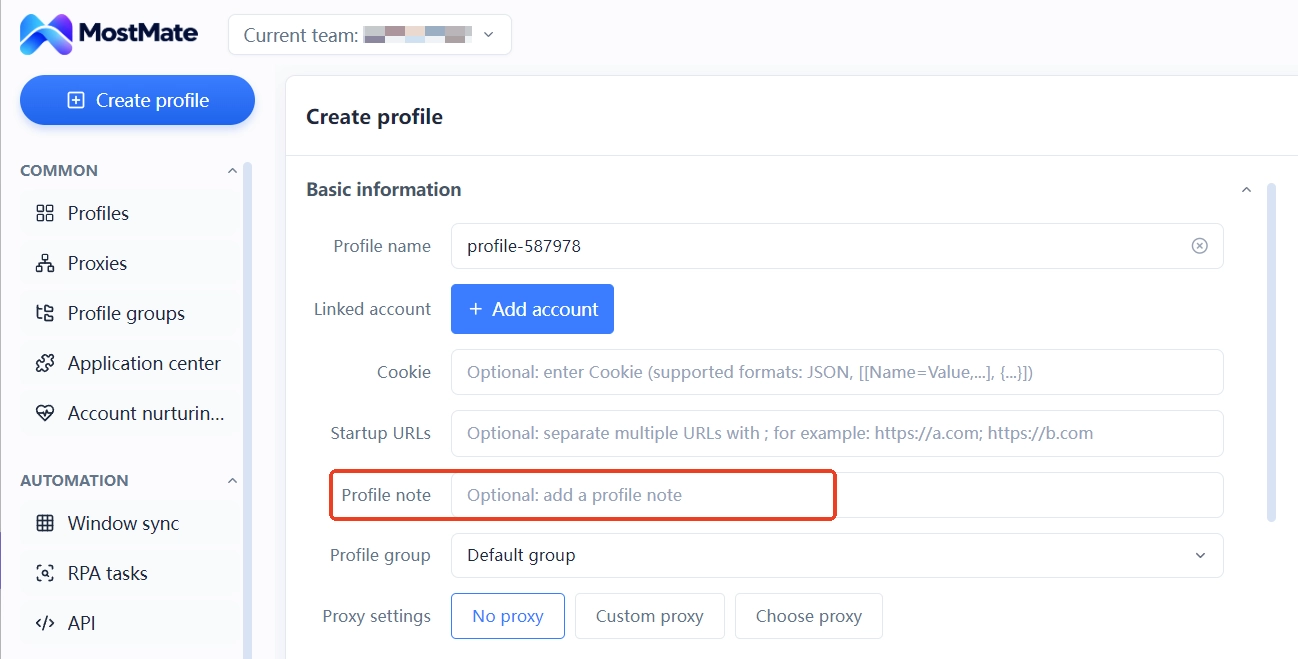
The notes field deserves a separate word on usage: register the mapping of "personal profile, pages under it, owning BM, payment method" for each cluster, entry by entry. This register is the working draft for scoping the impact on the day something happens, and the handover material when a new member takes over.
Which features correspond to environments, groups, and member logs is covered at the interface level on the what is MostMate page. The full capability map for the Facebook line is collected on the Facebook multi-account management page.

To state the boundary honestly: the environment layer fixes the login boundary and the usage record. Page attachment, BM structure, and payment ownership are structural actions completed in the platform backend, and the tool neither manages them on your behalf nor changes platform rules.
What to do, in which order, after an incident
If a page really does get restricted or a personal profile goes under review, the order of actions matters more than the actions themselves. First follow the notice and file the official appeal. Take the materials from the environment notes and the register. Check the association surface at the same time: whatever pages and BMs under your name you no longer manage, strip them out during the handling window. Deactivate, do not delete, the assets and environments already in trouble, so the appeal evidence stays intact. The five common transmission paths of contagion and the three damage-control steps for ban day are laid out in full in the multi-account ban containment guide; handling for a page matrix can reuse the same framework, replacing "account" with "admin personal profile" when scoping.
Facebook page matrix and contagion: FAQ
How many pages under one admin personal profile is safe?
The platform publishes no numeric cap. The risk is not the number itself but the overlap. The more important the pages under one profile, and the more of them, the wider the transmission when that profile runs into trouble. For core clusters, keep one cluster per profile; experimental pages can be looser.
If a page is taken down, will the admin personal profile be affected too?
Reverse transmission is possible. Penalties for a page violation can land on the admin account, and the notice is usually worded as associated with an account that violated the rules. This is exactly why the permission audit matters: remove your role from pages you no longer manage promptly, and the risk surface shrinks a notch.
Business Manager: centralized or separate?
Concentrating a brand's own multi-region pages in one BM is a legitimate use the platform accepts. A spread-out traffic matrix serves different niches; separate BMs, each binding its own payment and ad accounts, keep the association signals cleaner, so a problem in one place does not drag in other business lines.
Can an antidetect browser prevent page contagion?
No guarantee. What it fixes is the admin profile's login environment, proxy exit, and usage record. Page attachment structure, BM and payment ownership, and content and engagement discipline are executed through management processes. Only when both the environment layer and the management layer are clean does the transmission surface truly shrink.
Closing
The core of contagion defense for a page matrix is to register the three relationships of "who owns, who manages, who logs in" separately. Ownership: one cluster per profile. Permissions: removed as soon as a relationship ends. Login: one environment per profile. Build this structure before you scale, and it costs far less than explaining associations one by one after an incident. Environment groups, proxy binding, and member logs for all clusters can be set up in one panel; if you need it, download MostMate, register the ownership mapping of your existing page clusters in the environment notes first, and then talk about scaling.

MOSTMATE
Secure Multi-Account Management, Made Simple
Start with your first account and use MostMate to build safer, smarter, and more efficient multi-account operations.
- Independent profiles. Consistent identities.
- AI Automation · Account Health · Team Operations